Navigating Geopolitical Risk Finance Jobs in 2026
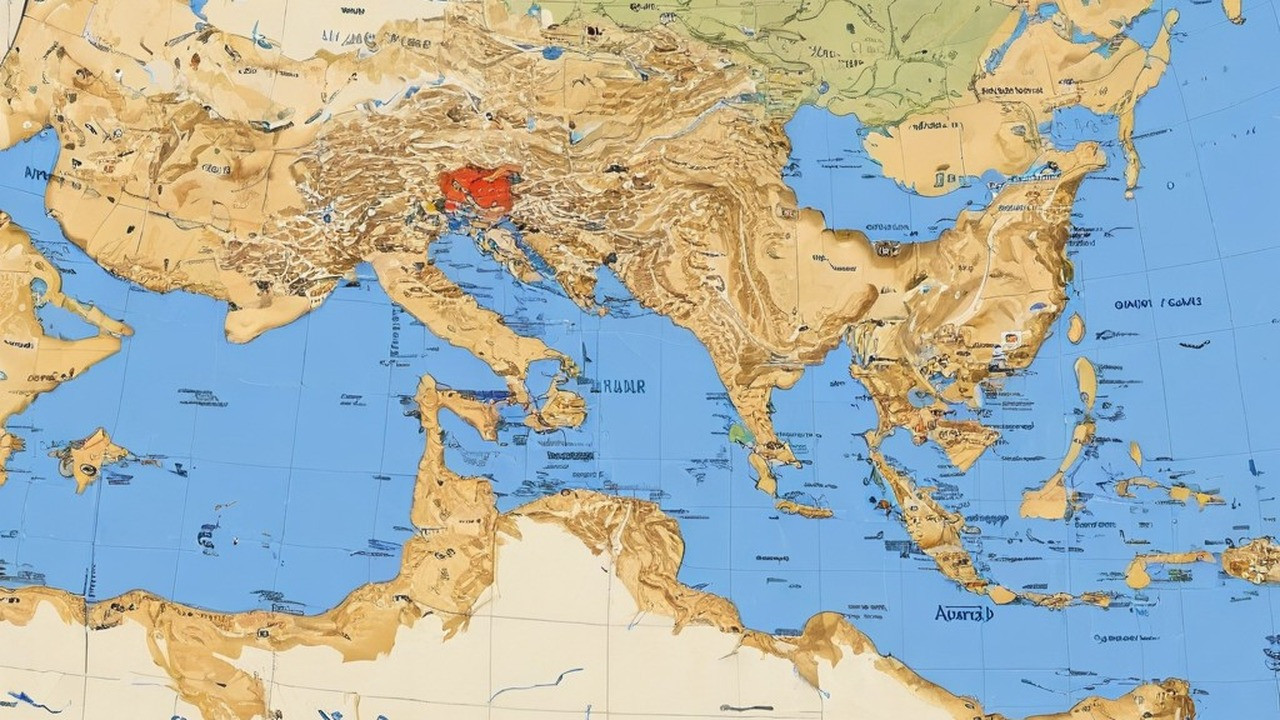
As the world's economic and political landscapes become increasingly intertwined, a new breed of financial professional has emerged as indispensable. Geopolitical risk finance jobs sit at the critical intersection of global markets, international relations, and strategic foresight. In 2026, these roles are not a niche curiosity but a central pillar in the resilience planning of every major corporation, investment fund, and financial institution. These experts are the early warning system and strategic navigators for organizations sailing through the turbulent waters of sanctions, trade wars, supply chain disruptions, and regional conflicts.
The Core of the Role: More Than Just Analysis

A professional in geopolitical risk finance doesn't just read reports; they translate complex political dynamics into tangible financial impact. Their day-to-day involves modeling scenario probabilities for events like elections in key economies, regulatory shifts in critical sectors, or the escalation of territorial disputes. They provide the "why" behind market movements, helping portfolio managers understand if a currency plunge is due to fundamental economics or impending political instability. In essence, they put hard numbers on soft power.
Real-World Impact: Case Studies from the Front Lines
The value of these roles is proven in action, not just theory. Consider these 2026 scenarios:
- The Semiconductor Sanction Shock: When new export controls on advanced chips were announced, geopolitical risk analysts at a major tech fund had already modeled three contingency plans weeks prior. Their preemptive work allowed the fund to adjust its Asian manufacturing supply chain investments and rebalance its tech portfolio, avoiding a 15% sector downturn that caught many competitors flat-footed.
- Energy Transition & Regional Stability: A hedge fund specializing in green energy used its geopolitical risk team to assess investment viability in a promising North African solar project. The team's deep dive into local governance, water resource disputes, and cross-border relations revealed latent instability risks not captured in standard financial models. The fund passed on the project, which later faced severe delays due to unforeseen political unrest.
- Central Bank Decisions & Market Sentiment: Analysts at a global bank correctly predicted that a certain central bank's "hawkish" turn was politically motivated to bolster national currency prestige ahead of an election, rather than purely inflationary concerns. This allowed their FX trading desk to position itself advantageously against the market's initial, simplistic interpretation.
The 2026 Toolkit: Skills, Pathways, and Career Benefits
Essential Skills for Success
To thrive in a geopolitical risk finance job in 2026, a multidisciplinary skill set is required:
- Quantitative Political Analysis: The ability to use data science tools to track sentiment, model conflict probabilities, and analyze policy datasets.
- Deep Regional Expertise: Fluency in the history, economics, and power structures of at least one key region (e.g., Indo-Pacific, MENA, Eastern Europe).
- Financial Acumen: Solid understanding of capital markets, corporate finance, and asset valuation to directly link political events to P&L statements and portfolio performance.
- Strategic Communication: Translating complex risk assessments into clear, actionable briefs for CEOs, CFOs, and investment committees.
Practical Career Pathways
There are several routes into this high-demand field:
- The Specialist Track: Starting in political science, international relations, or area studies, then adding a Master's in Finance or Economics, followed by roles in risk consultancies or bank research desks.
- The Finance Convert Track: Beginning as a traditional financial analyst or economist and systematically building geopolitical expertise through focused study, cross-training, and moving into integrated risk teams.
- The In-Demand Hybrid: Directly pursuing new, dedicated "Geopolitical Risk in Finance" Master's programs now offered by top universities, which blend the disciplines from day one.
The career benefits are significant: roles are high-visibility, offer direct impact on strategic decisions, command premium salaries due to specialized knowledge, and provide unparalleled intellectual challenge by constantly engaging with the world's most pressing issues.
Common Pitfalls and How to Avoid Them
Even with the right skills, professionals can stumble. Here are key mistakes to watch for in 2026:
- Over-reliance on Single-Source Data: Basing analysis solely on one government report or a single intelligence feed. The best practitioners triangulate data from diplomatic sources, local media, economic indicators, and on-ground corporate networks.
- The "Crystal Ball" Trap: Promising exact predictions. Geopolitical risk is about probabilities and scenarios, not certainty. Effective analysts present a range of outcomes with assigned likelihoods and clear triggers.
- Ignoring the Corporate Lens: Analyzing a political event in isolation without mapping its specific pathways to the company's operations, supply chain, customer base, and regulatory exposure.
- Failure to Update Models: Political landscapes shift rapidly. A static model from six months ago is often obsolete. Continuous monitoring and model iteration are non-negotiable.
Success lies in being a pragmatic connector, not an academic in an ivory tower or a trader focused only on screens. You must bridge the gap between the political world and the financial bottom line.